Welcome Kid A/Mnesia on November 5, 2021
A three-disc audio release accompanied by an exhibit of the art from Kid A and Amnesiac from Epic Games.
The new disc in the triple-disc release is a fabulous trip into the headspace of Radiohead --
In addition to half speed cut audio, it includes a 360 page art catalog (its dimensions are smaller than I'd imagined though--not a coffee table book), a small paperback book
Audio options include red and cream and black vinyl pressings, as well as a cassette package
Tracklist:
The Clock
Encore: Interference
Give Up the Ghost. Radiohead. Berkeley.
Night 2 the band gave us many of the "quieter" Radiohead compositions, and "Give Up the Ghost" is a favorite gift of Thom's to a lucky audience. When a loop pedal got stuck, Thom quipped, "Oh, shheeeeeit." Jonny mischievously looped his remark and played it back with all of the Greek laughing along. This bit of organic silliness fit snugly with the open-hearted genuine connection of artists and audience.
 >
>
kicking off
with the skittering of "Like Spinning Plates" with a whole new verse and ending with the isolated
original Jonny Greenwood string composition on "How To Disappear Completely"--an ethereal track which foretells his talent in
orchestral/symphonic film scoring. The evolution of Pulk/Pull (True Love Waits version) was a secret the band has kept
for 21 years--and nobody guessed.
"Fear Stalks the Land" chronicling the creation of Kid A between Thom Yorke and Stanley Donwood.
which includes B-sides previously unreleased, and a new song and video "If You Say the Word".
Kid A
A
1. Everything In Its Right Place
2. Kid A
3. The National Anthem
4. How To Disappear Completely
5. Treefingers
B
1. Optimistic
2. In Limbo
3. Idioteque
4. Morning Bell
5. Motion Picture Soundtrack
Amnesiac
C
1. Packt Like Sardines in a Crushd Tin Box
2. Pyramid Song
3. Pulk/Pull Revolving Doors
4. You And Whose Army?
5. I Might Be Wrong
D
1. Knives Out
2. Morning Bell/Amnesiac
3. Dollars and Cents
4. Hunting Bears
5. Like Spinning Plates
6. Life In A Glasshouse
Kid Amnesiae
E
1. Like Spinning Plates (‘Why Us?’ Version)
2. Untitled v1
3. Fog (Again Again Version)
4. If You Say The Word
5. Follow Me Around
F
1. Pulk/Pull (True Love Waits Version)
2. Untitled v2
3. The Morning Bell (In the Dark Version)
4. Pyramid Strings
5. Alt. Fast Track
6. Untitled v3
7. How to Disappear into Strings
Brain in a Bottle
Impossible Knots
I Am A Very Rude Person
Two feet Off the Ground
Amok
Not the News
Truth Ray ("Don't Let Go, Don't Let Go")
Traffic
Twist
Pink Section
Nose Grows Some
Cymbal Rush (turning into a tribal jam)
Saturdays
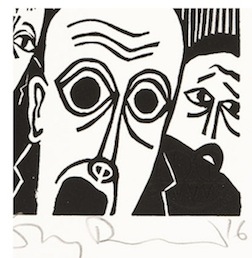
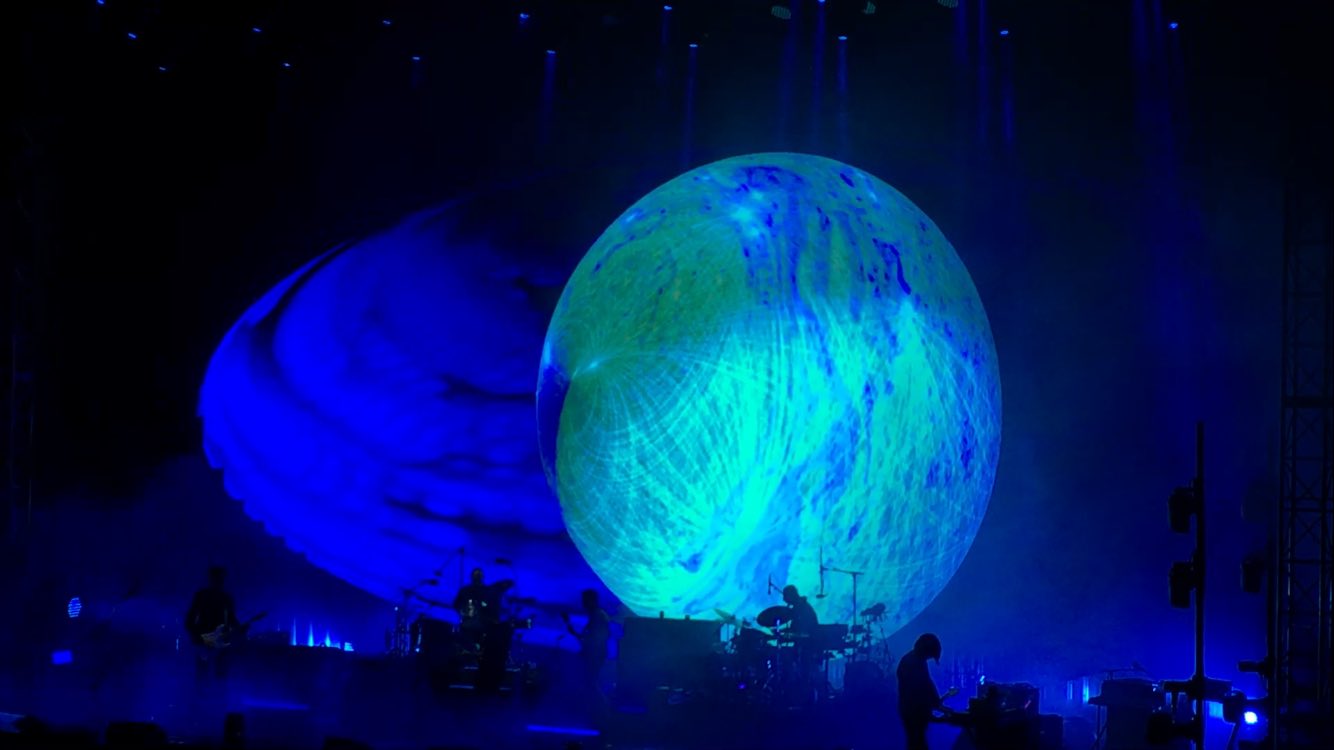
The Tourist. Radiohead. Berkeley.
Thom and company effervescent, connecting with both audiences. The two-night event was one/two of the best concerts I've ever experienced, even with the light rain on night one. Love my REI waterproof pants, I do. The crowd genuinely pumped, respectful -- a better audience more suited to absorb it all I can't imagine. After sitting on night one--with my whole family, a reprise of April 2012 in San Jose--night two I was transfixed in the pit on Jonny's side at the first step up. A sea of faces, Thom's brown cardigan (oh Berkeley) this year instead of elbow patches. The band was laid back, flowing, giddy, playful, intense, giving, receiving. Honestly. Just amazing.
The special edition of Radiohead's "A Moon Shaped Pool" has shipped this last week of September 2016 in the US from PA and NJ. The art-filled edition will include 2 bonus CD's: Spectre and Ill Wind, a track Thom has mentioned back in 2008 when it was a "rave" track. It's not a rave track anymore.
"I’ve just finished some stuff called "the north wind", a rave track. I’ve got a cool demo of it. I just want to finish it, put some words on it before I get bored. -- Thom Yorke
Radiohead must have have reworked it. "Keep your distance/and no harm will come/No ill wind will blow, will blow/Certain words must never be spoken/Or an ill wind will blow, will blow/Keep your cool/Do not give in to emotion/Or an ill wind will blow, will blow." Taken in the context of Thom Yorke's breakup, well, it fits. Yes, a review on the record is still coming.
Radiohead released a filmed performance of "The Present Tense", featuring Thom Yorke, Jonny Greenwood and a vintage (or reissued) Neumann Microtech Gefell CMV 563 modular microphone from Germany.
They just make sadness sound so sweet.
UPdate: Radiohead have released a second film, "The Numbers".
Which brings me to “A Moon Shaped Pool”, the tenth and latest album from Radiohead. (If you’re not here for the music, you can just stop reading now, it’s fine.) It’s no accident that the new Radiohead album leads off with “Burn the Witch”, a song that eerily fits into our socio-political landscape – even after all this time.
“This is a round up,” we’re warned—in a pulsing, driving song which careens towards an inevitable crash. Can you hear the fire build and the feel the heat burn? Radiohead’s gutsy string-singed statement against fear echoes its earlier musical admonishments. A look at the fracturing of states and countries around the globe suggests that we, in fact, “have not been paying attention.” The band’s clever and catchy redirect musically invokes the same fervor they are calling out, resulting in the palpable creepiness factor that flavors the witchy brew. Should I be enjoying these lyrics? The track becomes irresistible, absolving me of the guilt I might otherwise feel for confidently singing, “Red crosses on wooden doors”. How does Radiohead make me do this? Those tricksters.
From track two’s “Daydreaming” through the last track “True Love Waits”, the band offers up varied and intimate takes on and ways to make peace with each other. Each of the songs offers a window into a troubled relationship, and the moments of pain, repercussions, and recriminations. Thom’s brutal honesty about the scripts we follow, and the dances we dance to avoid learning and coping with the truth of a situation past repair, impossibly rises up instead of tramping us down.
The avalanche of artwork Stanley Donwood has been creating has been a joy. His tongue-in-cheek “How-To” which chronicles the frustrations of creating art was disappointing only because XL Recording marketers touted it as “free artwork” at the record store event. Donwood, perhaps realizing the oversell, aptly described it beforehand as an “inconsequential pamphlet” and with that in mind, the two-page typed freeform advice feels warmer and quietly amusing.
More details on the record tracks later. I’m still listening.
Radiohead open their tour May 20, 2016 in Amsterdam. "Burn The Witch" was the opener. "My Iron Lung", "Paranoid Android" and "Everything in its Right Place" joined new classics from "A Moon Shaped Pool". Haunting sounds, cascading melodies, tuneful guitars, ethereal music. Thanks to a live stream from http://twitcasting.tv/c:rhamsterdam "Arpeggi/Weird Fishes bounced all over the world.
21 May 2016. Night 2 in Amsterdam. Hats off to Periscope @radiohead_fr for the live stream! Setlist:
1. Burn The Witch
2. Daydreaming
3. Decks Dark
4. Desert Island Disk
5. Ful Stop
6. Lucky
7. There There
8. Lotus Flower
9. All I Need
10. Talk Show Host
11. Identikit
12. The Numbers
13. Present Tense
14. Separator
15. Nude
16. The National Anthem (with Hunting Bears outro)
17. Everything In Its Right Place
~~
18. Give Up The Ghost (Thom and Jonny) "This is for the funny guy yelling 'Creep.'"
19. How To Disappear Completely
20. Karma Police "Okay..."
21. Bloom
22. Street Spirit
~~
23. Bodysnatchers
24. Idioteque
The London Contemporary Orchestra’s interpretation of Jonny Greenwood’s orchestration created the rhythmic drive of ‘Burn The Witch’ (made by “picking up a plectrum and just twatting the cello”, says cellist Oliver Coates.) LCO's work on ‘Daydreaming’ was hailed by Thom Yorke as the sound of the album. “I remember laying down the cello at the end of "Daydreaming" and Thom said, 'That's its--that is the sound of the record.'"
Coates worked with Greenwood on Paul Thomas Anderson’s films "There Will Be Blood" and "The Master". "[O]n the morning of the recording I just thought it’d be another session: we’ll put down some chords and it’ll be fine. But it was so much better than I could have imagined. Nigel, Jonny and Thom all have this awesome relationship, and were so animated during the recording. I think it’s turned out really well, but there’s so much on my hard drive which they’ve had to cut, loads of Jonny’s scored stuff and so many more choral parts."
"I sent a really fawning email to Jonny the next day, saying that if he and the band were pleased with the intensity [of the recording], it’s because when our brains were forming and we looked for a definition of what intensity was they were one of the groups who gave it to us. I mean, when I was 15 and going to see Radiohead play live, I was sponging off their sound. So while they might not realise it, they got what they needed from us because they put it out there in the first place."
"There're a lot of barriers between different types of music, a lot of standoffishness and coolness, but when you break it down no one really knows what they’re doing, everyone’s just hedging their bets. And Jonny’s so shy with the pieces he composes, so I was just trying to say, 'This is amazing.' Of course he was like [laughs] 'ÖGreat, thanks.'” - Excerpted from an Interview with FACT, May 27, 2016
Eat Toast and Don't Worry About the Lyrics
"You want to make it vaguely clear."
For all the songwriters, musicians, fans and listeners experiencing, analyzing and absorbing "A Moon Shaped Pool", a few words from Thom Yorke about understanding what he's saying.
"If you ask most musicians, they're surprised, dumbfounded when it's not obvious first time round when you play it for someone. I mean, I have that trouble with the band sometimes. "Everything in Its Right Place" is the absolute classic example of that. It has an extra beat in it, which I didn't even realize. And Jonny's like, "It doesn't cycle normally. It doesn't cycle right." And I'm like, "Whaaat?" But it's a genuine shock to me, that it's not blindingly obvious, 'cause it's blindingly obvious to the person who writes it. Lyrics are different in that if your words are any good then what you're trying to get across is always gonna be -- 'meaning' in the normal sense of the word is not exactly what you're trying to do. I mean, off the top of my head, "Reckoner" for example. I'm singing those words because I have to sing those words. It was necessary for me to sing those words, with that melody, at that time. Much like it's necessary to have toast in the morning, or whatever. It's--that's what has to happen. And the words make you feel good or make you feel better or whatever. They're there to fulfill something, some need in you. But increasingly, I fall into bad habits where I then worry, you know, about meaning afterwards or whatever, which--'cause you're writing songs, you kind of think, well maybe I should worry about that. But actually, I think, that's a deeply unhealthy thing to do . . . it reduces it. It can reduce it. You reduce the initial energy, your initial response to things, because initial response to things are always best, in this particular case." *Thom laughs at himself*
"A set of lyrics add up to an emotion, that you can't put your finger on, but it leaves you sort of better off at the end of it That to me is the idea. I mean, we only print lyrics, I think, on records because my pronunciation's not very good, and actually I'd like people to understand sometimes." -- Thom Yorke
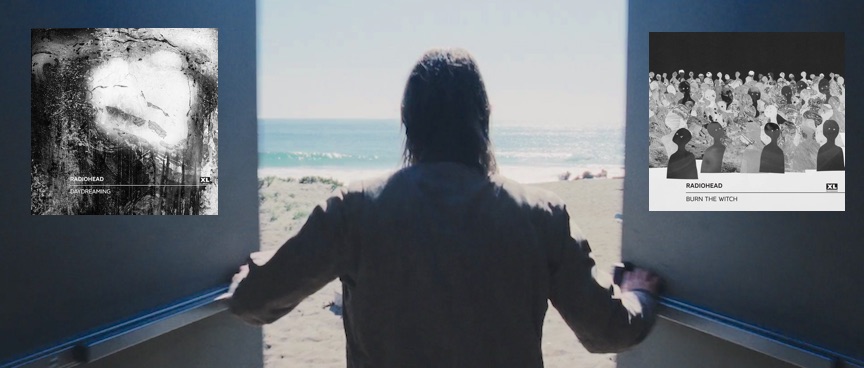
The Radiohead singles "Daydreaming" and "Burn the Witch" feature layers of orchestration and strings, but really what they have in common is (just) Radiohead. Radiohead is Radiohead. Tautology, but true.
Released May 6, 2016, "Daydreaming" begins with tingling bells and piano notes as Thom walks down a tunnel in the manner of aliens exiting the mothership in the film "Close Encounters of the Third Kind". Never thought those two items would be juxtaposed in a sentence, but that's Radiohead for you. "Dreamers, they never learn. Beyond the point of no return. It's too late, the damage is done. These thoughts, beyond me, beyond you." Gerard Manley-Hopkins couldn't have put it better. Is everybody happy? A loose odyssey of opening doors into vignettes which perhaps include, "a white room by a window where the sun comes up". This man needs a hug.
The last clearly identifiable lyrics are: "We are just happy to serve you." This unexpected phrase incongruently made me think of "To Serve Man" from the Twilight Zone. Aliens again. I'm pretty sure that wasn't intended. This proves how in 6 minutes and 26 seconds, the number of meanings quadruples by the power of 7. I can say that the dissonant strings at the end are reminiscent of "Spectre". Finally, if you think there'll be a cozy sun-filled ending, with a clear message, then you're barking up the wrong band. We get Thom traipsing through snow a la "The Revenant", then crawling into (surprise!) a tiny cave, dimly lit by a prehistoric fire, mouthing incomprehensible (even for Thom) words. (Update: Listened to an enhanced audio clip [thanks M!] of the lyric: "Half of my life, half of my love.") The feeling of the music, in contrast to what is on the surface, an outward-facing search, is a drawing inward. The ultimate withdrawal, accomplished alone in a cave, doesn't feel safe, warm or fuzzy. My guess is that "Daydreaming" closes out the record, while "Burn the Witch" is the opening track.
LP9 - The full album release is May 8, 2016.
Back in 2006, Thom Yorke played a few chords, saying "'Burn The Witch' -- one day."
Today, May 3, 2016, is that day. Radiohead have finally found the orchestration for their years-in-the-making version of "Burn The Witch."
Burn The Witch
The Penderecki-ebullience of Radiohead's single released on May 3, 2016 musically belies the McCarthy-esque taunts of a model village where persecution has been perfected. The evil is not banal so much as a way of life.
At 3 minutes and 59 seconds, "Burn The Witch" is another beautiful "4-Minute Warning" from a band that pushes back against the pulse of mob mentality.
Stay in the shadows
Cheer at the gallows
This is a round up
This is a low flying panic attack
Sing the song on the jukebox that goes
Burn the witch
Burn the witch
We know where you live
Red crosses on wooden doors
If you float, you'll burn
Loose talk around tables
Abandon all reason . . . .
Avoid all eye contact
Do not react
Shoot the messengers
This is a low flying panic attack
Sing a song of sixpence that goes
Burn the witch
Burn the witch
We know where you live
We know where you live
So what does this all mean?
The lyrics describe the fear in a model town and how to not get caught in a witch hunt. The refrain threatens. The townspeople follow their mayor's instructions, readying their model town for a visiting official who appears to be evaluating the town with his clipboard. No one who lives or works in the colorful model town has any expression, but they are busy taunting a woman tied at the stake with knives. The Maypole braided with flowers is . . . a gallows. Jobe's red fruit packed in crates, stacked in front of the hothouse, though it's unclear what those people brushing theirs shirts are doing. The mayor appears chummy, patting the visitor on the back in just the way politicians do--when you don't know whose side they're on. The centerpiece of the tour is a giant wicker man with a ladder to a locked door, which "traps" the visitor. The mob raises its hands together as the fires burn--but the charred visitor has somehow escaped. Was it all just a performance to keep the mob in thrall, a pretense of sacrificing the outsider? Or did this man manage his own escape, to warn us who lives in a "model town" of torture? (We do.)
“Sing a song of sixpence” -- quoted in the postcard mailer for the single's release--is a nursery rhyme associated with cruelty and torture. Twenty-four live blackbirds are baked into a pie, for a king to eat. “When the pie was opened the birds began to sing” – well, not likely, but torture does often result in a confession, whether true or false. Those people accused of witchcraft who were drowned, stoned, or buried alive for being witches were victims of fear. (Hence also the slang of someone who “sings” or informs.) Blackbirds in the rhyme, according to some researchers, represent the monks whose monasteries were serially overtaken by the king, then dissolved. The dissolution was an example of a monarch’s abuse of power—exercised in order to break the power of the church and rob its coffers. But note there are no blackbirds present in the video, only a bluebird, strikingly like the twitter icon. The band's teaser featured the video's bluebird "tweeting" in advance of the release, clever.
Along with abuses of power and oppression from rulers/government, Radiohead regularly conjures the recurring spectre of divide-and-conquer fear-mongering (of the “other”). Such finger-pointing and scapegoating leads to mobs and violence, and have been useful in right-wing agendas around the world promoting extremism, isolationism, protectionism, and vigilanteism. The lyrics were written back in 2005, with some phrases floating around even earlier, at the time of "Hail to The Thief". But they still survey the currents of today's political and moralistic waters.
The bluebird of happiness, which sings to open and close the proceedings leads us to believe that things will be ever thus . . . unless, of course, we change them.
 Radiohead 2017 Tour Dates" at W.A.S.T.E headquarters/Deadairspace. 2016 festivals in Spain, Portugal, Switzerland, Iceland, and Japan. New headliner dates for London (three nights), Paris, Amsterdam, Mexico City, and the US.
Thom and Nigel brought the beats of "Tomorrow's Modern Boxes" and "The Eraser" to Somerset from March 11-13 at the electronic weekender festival Bloc 2016, where your ticket includes chalet housing, a water park, funfair and dodgems, whatever those are. The stages and bars never close. You can stay Thursday through Monday morning.
Will the new record include Silent Spring and Desert Island Disc, which Thom performed at Pathway to Paris in support of the COP21 Climate Change summit? Or the cut "Lift" reimagined and reworked yet again for a studio version? A handful of songs have been resurrected in this way. (Ed O'Brien mentions a song called "Up on the Ladder" back in 1999, which did not surface until 2007 on In Rainbows Disc 2.)
Spectre
Last year we were asked to write a theme tune for the Bond movie Spectre.
Yes we were. It didn't work out, but became something of our own, which we love very much.
As the year closes we thought you might like to hear it.
Merry Christmas. May the force be with you.
Stanley Donwood in the Panic Office: The Art of the Bear at the Carriageworks in Sydney
Tomorrow's Modern Boxes - Thom Yorke tours his solo release material and performs select Atoms For Peace songs

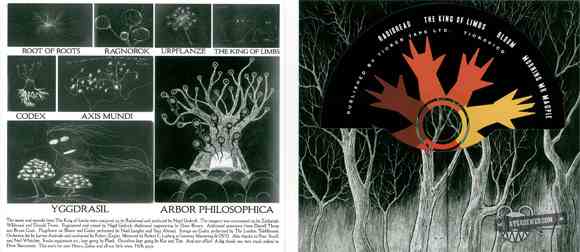
Radiohead - The Zen Album
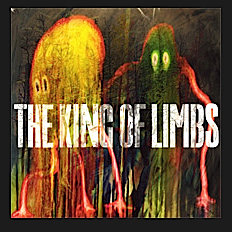
The King of Limbs: Explore, Expand, Embrace
By Renie Pickman-Thoon
March 7, 2011
Finally, LP8 from Radiohead, my favorite band. Already happy, I joined the world-wide listening party. My anticipation was high and I was prepared to be delivered into Radiohead delirium.
Except . . . the album was not cooperating with me. My experience was non-musical. I want This. Or That. Why isn't it like____. (You fill that in.) Where are the guitars?
And I was kind of stumped. Then slightly irritated. Then annoyed.
Where was ____? (Use additional sheets if necessary.)
I like those varied instruments. More instruments. More of the sound that was in ____. Fill in all the blankety-blanks.
My frustration grew. This is Radiohead, and I know what Radiohead should sound like. Can sound like. What is this?
My personal tirade got louder, and it became even more about me, and less about the music.
I was coming from someplace. With specific needs. And wants. And expectations.
This was too difficult a listen. I was working against the music.
I was fighting it.
Instead of letting it do its work.
Instead of letting it happen to me.
Turned it off. Had to wait to listen more. When I was ready. Take it slowly.
You can't gulp this down.
So I put it aside. Let it be.
I know it sounds zen. But honestly, it was the right move.
Gradually, my ears opened. A few songs at a time. They are actually too much to do in order, right now.
This is not “In Rainbows”: “In Rainbows” I could hear over and over again, in order. Not this.
If I call this Radiohead's "Zen album" the tag may alienate whole tribes of listeners, straining for guitar-based anthems (insert your pick here). Or even guitar-backed anthems (insert your choice). Or a sweet guitar lick sitting like a peach atop the fruit bowl of fuller instrumentation (Air Bag--I couldn't resist filling it in, sorry). Moreover, describing the release as zen when I'm not a devout follower of whatever Zen means to those who are serious about it might seem like profaning the scared. And I'm no Salman Rushdie.
But I am a devout follower of Radiohead. I follow what they do, musically. I am a latecomer to the party, having arrived just prior to "In Rainbows", so my attachment to early work like “Kid A” and “OK Computer” is less historically rooted and more matter of fact. The magnificence of most, but not all, of their work is settled law in my court. I have not had to stretch like those early fans.
This is Something Different. Yes. But not out of the blue. There is a natural movement towards and in these songs.
Bloom
We've been invited into the garden of life, and boy is it "tchock" full of goings-on. I feel as if I were quite small and landing with my tiny wings in a patch of colors, textures, smells, and sounds--water, plant life, pungent dirt, insect life, and a heartbeat of life throughout. Pulses in every direction, a multi-layered life force. "Bloom" is a flower which reveals its beauty in layers of petals. The richness of "Bloom" lies in those layers, like Four Tet's "Hands". Repeated listening allows you to find and appreciate the textures. It's so dense that it seems impenetrable, but when you give yourself over to one instrument or pulse or voice at a time, you can find a listening point from which to start. Enjoy that first. Then you have a place from which to add another "voice" in the song. Eventually, the parts seem to speak to and with each other. You can find some of the seedlings for "Bloom" in Four Tet's version of the track "Atoms for Peace" remixed from Thom Yorke's solo album "The Eraser". 4:40 layers. No insistent snare-y drum trumble (yes, I made up that word, which means tremble rumble) like "Bloom" though.
Remember when Thom played Sun-Ra and Charles Mingus on Gilles Peterson's radio show? This song is jazz-style, like a jam--but not "jazz". Let "Bloom" roll over you like you're in a club listening to musicians improvise--except without strictly taking turns. Instead, it moves in out and around--in exactly the kind of layered Radiohead richness that we have come to know and love--except this bursts forth in a fresh way. Jonny Greenwood is busiest on this track with his keyboard and ondes martenot simmerings and percolations. From 2:50 through 3:23 he is pushing vibrant plants up through the soil. Don't you love that horn sound (is it a trumpet?) Maybe it's a touch of the Christian Scott influence; he remixed the title track of "The Eraser" and even played on stage here and there with the touring band Atoms for Peace. But no, it's a flugelhorn!
I hear Thom whispering "Psst". He is trying to get our attention. "Bloom" sets us on our way through this album and through life. "The thousand-petaled lotus signifies spiritual illumination. Each opening of the petal is the gradual unfolding of the consciousness on the path of enlightenment."[1] The garden will seem overwhelming at first, but open your heart and your mind will follow. Enough listenings and you may feel as if the 10-note bass farewell from Colin Greenwood at the close of the song is the end of a hymn to life. Did I say hymn? Transcendent, after all.
Trust them.
Morning Mr. Magpie
Thirty-seven seconds into the previously known version of this song, from "Gagging Order: Acoustic Sessions", Thom begins to sing, "You know you should but you don't." and about 43 seconds into this new version he is in the same key. "You've got some nerve coming here." The older version was a 2:32 riff. The new song still rings with the accusation that the errant magpie “stole it all". Phil Selway’s sticks tease out a little tappity tap. Listen to the first 21 seconds of "And It Rained All Night” from "The Eraser". Is the Magpie our government? Our corporate world? Our lesser selves? Who is stealing all the magic? As if he's running, under pressure, Thom uses those short little breaths as a kind of percussion. Colin's bass line hunts around like it's a melody itself. The hint of menace grows stronger in the next track, and even a shade darker in "Feral". We know we should, but we don't.
Little By Little
"Turn to nasty now" clues us into the worldly quagmire the lyrics warn will pull us under. "Obligation, complication. Routines and schedules will drug and kill you." Masquerading as a throwback tune, it's not. It might feel a bit familiar to Flea's sound on the melodica in live performances of "Skip Divided" from "The Eraser". There, the bassist took over Thom's snake charmer vocal line; here, the twangly sexy slithery guitars do the same job. But "Little By Little" takes us further along a Tibetan trek. We are seduced, little by little, into the dead and deadening lifeless life. Hence the snake charmer vibe to the song.
A more cerebral option here might have been "The Daily Mail", in which Thom takes to task the lunatics in charge, the cheaters, the brow-beaters.. The audience at the Fox Theater opening night show in Oakland, CA got a sweet taste of what Radiohead might do with that song. It has great bones, and it's fantastic. "The Daily Mail" would have provided a fitting twin to "Morning Mr. Magpie": the song takes its inspiration from the newspaper which, according to Thom, is like Fox News. However, a finger-wagging state-of-the-union song would have broken the more insistent and personal spell Radiohead were casting with "The King of Limbs".
I imagine what "Little By Little" will sound like in concert. Performed live, maybe Jonny's guitar will be loud, and Thom's will have the beautiful sound gain turned way up, and Ed O’Brien will be strumming away. Maybe. Could there be guitars in the garden? I think I lost my zen focus there for a moment.
Feral
Feral: Reverting to an untamed state. Escaping from the domesticated pack. "The bud of the lotus symbolizes potential, specifically of a spiritual nature. Because the lotus rises from unclean water to blossom as a pure, uncontaminated flower, it is a symbol of purity and resurrection. In the same way the lotus flower goes through much in its growth before emerging from dirty water to become a beautiful flower, the individual consciousness does the same on its path to enlightenment as the so-called impurities of unenlightened thinking gradually fade." [1] In "Feral" I hear fierce, primal drive. Full sentences, full thoughts--not a chance. I do hear at 1:17 , however, "Set me free". I also clearly hear "Don't Look -- Down" repeated by Thom, warning us that below the surface is the drecky dirty water from which a lotus flower emerges.
"Skirting on the Surface" didn't make it onto this record, but I think it might have been considered here. Thom played this song at the Echoplex, and his voice sent chills down my spine. "When we realize we're only held in suspension 'til someone comes along and shakes us." We are stuck in the world of appearances, "We're just skirting on the surface." This song is completely in tune with the message of this album. Thom and Co. are here to do some shaking, if we'll let them. But the sound of this part of the journey is dark and dirty. So the lilting "Skirting on the Surface" is still in the ether.
In this adrenaline groove the band is riffing off of Blawan - Fram and Burial's Remix of Thom's song. Jumpy, dubstep. No room for contemplation and not the best for dancing--too manic for that. Though I guess dancers shuffle about in clubs to this music, don't they? Have you been listening to the office charts that the band members post on their DEADAIRSPACE website? It gives hints about what they're into, what they're listening to, what matters to them, what the future might hold.
Compare the Trentemøller remix of Modeselektor's "White Flash" to "Feral" (compare 3:16 to 1:05). It's not the identical sound, but the vibe is there, and of course, Thom's own "Hearing Damage" presages this cut. The Proud Evolution 500qd Remix is very much in evidence here as well--I feel as if Thom took over this track by himself. Since Jonny was recording with Radiohead by day, and composing the soundtrack to the film "Norwegian Wood" at night, perhaps that explains the less defined presence of Jonny on "Feral" and other tracks. Who knows. For the most part, Jonny's orchestrations and arrangements are not major statements on this record.
In fact, there is no jostling of major statements or conflicting themes, or random topics on this record. Instead, the band members collectively create a screenplay for the ears, propelling the movement forward, enhancing rather than distracting from the central theme of this work.
Lotus Flower
"Listen to your heart." This is the centerpiece of the album, the centerpiece of its meaning, and the center of a mandala. Yup, it's placed right in the center of the album too. (These guys are so good.) Could there be a clearer indication of what this record is about? Lotus Flower: In Tibetan Buddhism, it's not just "a" symbol, but really, "the" symbol. I'm not clever enough to distill a set of complex beliefs into a record review, so forgive me these ineptitudes. "There's an empty space inside my heart where the weeds take root, so now I'll set you free." These are the lush celebrations of the lotus flower, the joy of dancing round the pit, which is a mandala, acted out in three dimensions. The boys have been reading their Carl Jung and perhaps even the Red Book, a mind-blowing compendium of Jung's own outpourings and experience, just recently published and exhibited at the Rubin Museum of Art in New York. Jung returned again and again to his mandalas, beautiful creations infused with meaning and soul. The exhibit placed the Red Book in context with mandalas in Tibetan beliefs and culture. Dr. Martin Brauen's paper "The Mandala in Tibetan Buddhism" offers an introduction to the mandala as used by Tibetan Buddhists, and gives a critical perspective on the eminent psychologist C.G. Jung’s interpretation of the sacred icon.[2]
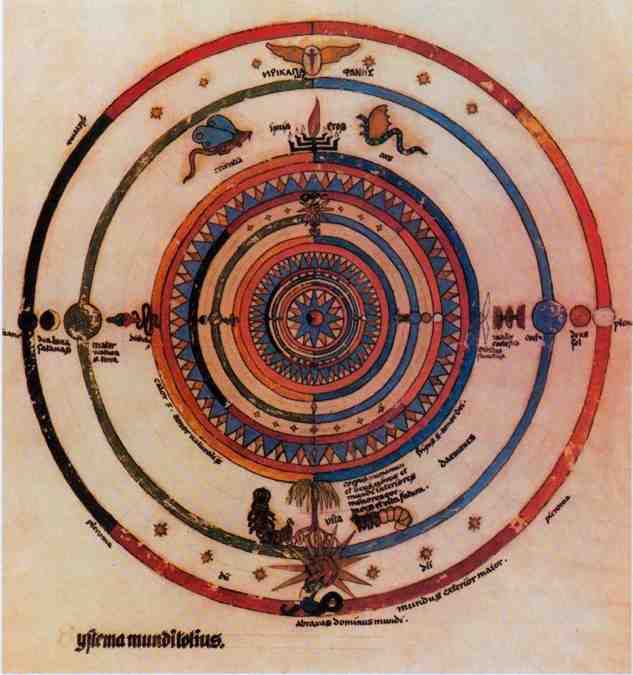
In his paper, Brauen observes, "Jung recognized that a mandala does not really have to be painted or drawn, but can also be danced . . . or executed and experienced in ritual." This is Thom's dancing round the pit. Five musicians have created a musical mandala, this record is its execution, and this cut is at its heart.
"Slowly we unfurl as lotus flowers."
Unsurprisingly, there is also connection to the album title. It's not just about the old and revered tree in the woods. It's about us.
"Eventually, in the context of the picture of the person in the Kālacakra Tantra, we shall find out that the human being, too, is seen as a mandala. For instance, each of the wind channels, which according to tantric conception flow inside the body, is linked to a particular direction, element, aggregate (skandha), and color, thereby forming a mandala. According to the a Sutra text (Dharma-mandala Sūtra), the human body is regarded as a type of fivefold mandala represented symbolically by the trunk and the four limbs." [2]
We are each a mandala. We are each a "King of Limbs".
Pretty cool, huh?
Codex
Following the fervor of dancing round the pit, we find a place of even heartbeats. The intro, the start of a vocal and then the strange abrupt stop, sounds like a jump into the water; the vocal is cut off as we hit the water, and then we can hear our heartbeat, loud, amplified, all around us. We've made the jump and we are alone. Solitude. As mindful meditation might say, we are inside of it. "The water's clear and innocent." Try slowly breathing to this track.
Jonny's orchestration here is strong. Thom's singing is relaxed, full, and unfussy for most of this song. The vocal work of the past two Radiohead albums show that finally, Thom has confidence in his voice. This sound is about clarity. In sound, in mind. Codex refers to an ancient text or classical manuscript. A sacred scripture. The Latin root? Tree trunk, wooden tablet, book, variant of caudex, trunk. Thus, the twin meanings are united in this lovely song.
Give Up the Ghost
Now we find we are fully in the garden, with nature's surround-sound, poised for a struggle of the soul.
In this journey we are leaving behind our superficial selves, the "ghost" of who we are. "Don't haunt me" Thom pleads, as he sheds that pale self and is delivered into the capable arms of a deity. It's ok, because Tibetan deities have anywhere from 4 to 1000 arms.
Thom found the sound and style he wanted for this track back in 2009, when the song appeared in the setlist as an encore at his solo performance at the Latitude Festival. As it turns out, the song was not publicly performed until much later, at a benefit held at the Cambridge Corn Exchange for the Green party candidate. Thom looped the slapping of his guitar and the vocal chant of "Don't haunt me", and played it all by himself. (He also played it acoustically at the Big Chill Festival.) I remember sitting in a parked car hearing the Cambridge Corn Exchange version from a Youtube mp3 burn, and not being able to move afterward. I was mesmerized.
It's the plaintive Neil Young sound. (Have you ever seen/heard Thom playing Neil's piano singing "After The Gold Rush"? A must-see. He's so sincere, and TRYING so hard.) Except the extraordinary hypnotic effect of the song is pure Radiohead. The sound of "Give Up the Ghost" is suitably surreal, whirling, rising, falling. Vocal lines blurring. A song of surrender, when "I think I have had my fill", I will surrender "into your arms."
Gather up the lost and sold
into your arms, into your arms.
Gather up the pitiful
into your arms, into your arms.
While it seems impossible
into your arms
I think I have had my fill
into your arms
into your arms
into your arms
into your arms
I think I should give up the ghost
into your arms.
The voices fade away, and we are in the garden. This is one amazing song.
Separator
Here is our wake up call.
The spiritual and musical journey ends with Separator, an upbeat, spacey, floaty, song-as-contentment. Enlightenment. It literally is a "release". No anguish here. "Finally I'm free of all the weight I've been carrying". It simplifies and stretches out in the grass of this zen experience.
Its hum reminds me of Massive Attack. Something about the feel. Thom and Robert Del Naja of Massive Attack are buddies. The elements here blend, and don't chafe at one another. The busy, layered sound of "Bloom" has made its journey to this place. It sounds happy to me. The bass line. The joy of the repeating choral, choir sounds of a round. Yep, a round.
"Wake Me Up....wake me uh, uh, uh, uh up." It's the perfect final piece. Except it's not capital "F" Final: "If you think this is over then you're wrong". It all starts again, you see, this journey to enlightenment.
So please, do yourself a favor. Try to listen to the tracks until you reach a point where you wake up with one or just find one of these songs in your head. Each song starts to reside inside you. When you hear it next, you'll hear more. Fight less.
Or imagine what these songs will be like, played live. We will get to share in the zen experience with these five inventive corroborative musicians. I will be--I hope--in a crowd of enthusiasts like you, ready to take a journey.
I can't wait.
Maybe you're alarmed or pissed off or stymied right now. I totally understand: I was there. If you can manage it, put aside your hopes and previous ideas about what you wanted to hear or what Radiohead "should" sound like. "Open your mouth wide." Because they are still ahead of the curve, inviting you to explore with them, expand, embrace.
Trust them.
____________________________
[1] http://www.harekrsna.de/Lotus-FLower.htm There are many places to learn about Lotus Flowers, mandalas, and Tibetan practices and beliefs. I cite this one only as a simple example.
[2] Read this and more at: http://aras.org/docs/00030MandalaBrauen.pdf Both were the topics of exhibitions shown at the Rubin Museum of Art (RMA): Mandala: The Perfect Circle (August 14, 2009 – January 11, 2010) and The Red Book of C.G. Jung: Creation of a New Cosmology (October 7, 2009 – January 25, 2010). Both exhibits were brilliant, and inspiring. David Byrne, Thom's pal, spoke at the museum. I didn't go that day. Check out a copy of Jung's book at your local library, as it's expensive to buy. The two illustrations appearing with this article were created by Carl Jung in the Red Book. The scanned images are used here for educational purposes and no intellectual copyright infringement is intended.
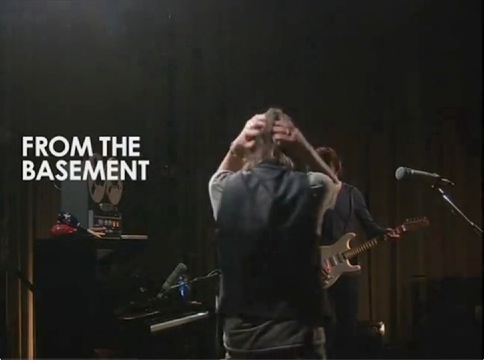
Radiohead - From the Basement 2011 - The King Of Limbs
28 July, 2011
Colin has a strange notion for a wii, but mostly the band plus guest musicians (including Clive Deamer, from Portishead) render interpretations of their 8 tasty tracks from The King of Limbs. "Codex" is particularly spectacular in its stillness, making a listener sit and absorb. The three horns balance their sound, and the camera lets us see fingers, fingerings, and faces. The opportunity to see each member's contributions up close is a joy for any music lover, but Radiohead fans who may never be able to score a ticket to a live show can really appreciate this inside-the-studio live look. "Bloom" shows just what a live version can do for these cuts. "Feral" absolutely jumps, and I am forced to concede that not only can you dance to that track, it demands movement. Thom's vocals on "Louts Flower" are not the smoothest--but the maracas make the moment. Two tracks join TKOL playlist: "The Daily Mail" gets the full band treatment, to wonderful effect. "Staircase" gets a new upbeat sound after being presented solo by Thom on guitar in non-Radiohead appearances. Although attendees of the recording session aver that "Super Collider" was also performed, it apparently didn't make the 54-minute limit cut. Oh, you advert capitalists, you. Let's hope the band releases it sometime. If it passes muster with Thom, the King of Fuss.
"The King of Limbs". Happy Valentine's Day, Love Radiohead.
An early release of the 8-track download is available now.
One of the pieces of artwork for the King of Limbs is entitled "Divided Woods", a screen printed version of one of the series of oil paintings that Stanley Donwood and Tom Yorke produced during the recording of the new Radiohead album. (Source, Stanley Donwood.)
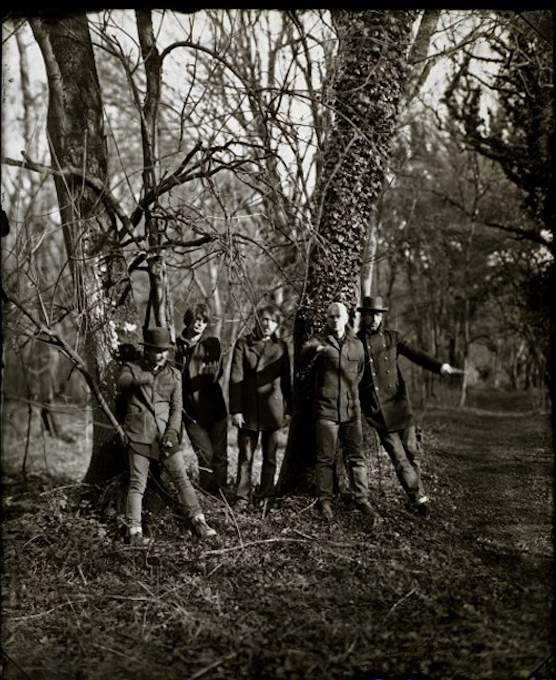
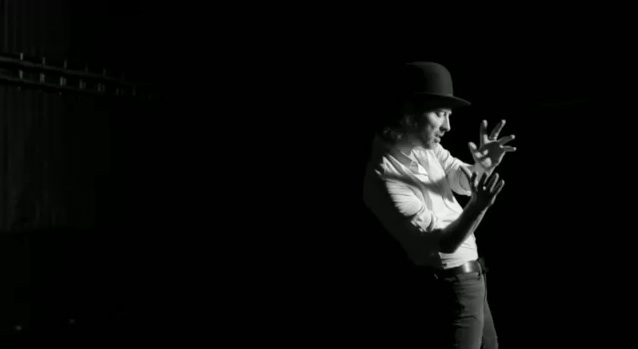
Lotus Flower, official video on Youtube.
UPDATE: April 8, 2011 - Etched onto side one of the vinyl release of The King of Limbs are the words "a never ending mesh". Etched onto side two of the record are the words "intertwined into everything". The whole content can be found in Thom Yorke's scrapbook for the Eraser, and reads(in relevant part): "branches. endless. uncontrollable. a never ending mesh intertwined in to everything. paths. in roads. maps. lost. reach over the path. walk down the path."
UPDATE: March 28, 2011
The Butcher and Super Collider will be released on 7" vinyl record on April, 16 2011 in the UK only.
Credits for the album:
The music and sounds of The King Of Limbs were conjured up by Radiohead and Nigel Godrich. The imagery was summoned up by Zachariah Wildwood and Donald Twain. Engineered and mixed by Nigel Godrich. Additional engineering by Drew Brown. Additional assistance by Darrell Thorp and Bryan Cooke. Flugelhorn on Bloom and Codex performed by Noel Langley and Yazz Ahmed. Strings on Codex performed by The London Telefilmonic Orchestra, led by Levine Andrale and conducted by Robert Ziegler. Mastered by Robert C. Ludwig at Gateway Mastering & DVD. Also thanks to Peter Yozell, and Neil Whitcher. Studio equipment etc., kept going by Plank. Ourselves kept going by Kat and Tim. And our office! A big thank you very much indeed to Drew Barrymore. This one’s for new Henry, Zohar and all our little ones. Hello Guys
UPDATE: March 15, 2011- The King of Limbs is now available to order on vinyl. As is In Rainbows. Way cool.
The King of Limbs. Radiohead's LP8 arrives on Valentine's Day 2011.
Early Release (likely to prevent a site crash) February 18. February 19 is still the "official" download day.
Tracklist:
Bloom
What tracks? Our best guess (Results Saturday February 19) - Add these songs:
The Daily Mail
To These:
Lotus Flower
Thom Yorke & Atoms for Peace, Fox Theater in Oakland
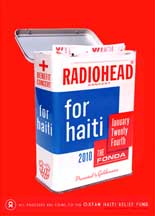
Radiohead played a benefit concert for Haiti raising over half a million dollars in a small LA venue in front of 1,200 fans who bought tickets auction-style to "raise the most money" for the relief fund. Thom said they were not in concert form, as they were "on holiday" to record songs for their next release. The 24-song set included "Lotus Flower" which Thom played solo during his Echoplex club set (it was haunting and beautiful), and Orpheum dates with his "Eraser" band, also known as ??????. Those musicians are Beck drummer Joey Waronker, Radiohead producer Nigel Godrich, percussionist and Forro in the Dark lead Mauro Refosco, and bassist Flea from the Red Hot Chili Peppers. Thom also played "Lotus Flower" solo at the Latitude Festival. Count "Lotus Flower" in.
The South American tour of Radiohead in 2009 included an already sinuous and spell-inducing version of "These Are My Twisted Words", which we expect to be on the new record. (Will we call it a record? Yes we will.) Expect this song, and maybe even expect it to open the album.
Look for "Judge Jury & Executioner" on the new record, as the full Eraser band showed this piece to excellent advantage, though it sounds like older stuff after "In Rainbows".
"Open the Floodgates" (Thom thinks that's what it's called) opened his "brand brand brand spanking new songs" sung with a piano, clocking in mostly at just over three minutes each. "Floodgates" seems like its still finding itself. "Skirting the Surface" though, is a good bet, with the latter floating out of Thom very smoothly and easily at the Echoplex. He's comfortable with this tune already.
Unlikely:
"Feeling Pulled Apart By Horses" is a piece Thom and Jonny wrote, so although a dark horse as it was already released on the 12-inch EP from Thom, it might well find its way onto the new album. Besides, Thom's chanting and breathing has always been at home in the full band (think "National Anthem" and "Ideoteque" when performed live).
"The Hollow Earth" seems like Thom's piece, and indeed he has said it was intended for the Eraser, so it's an unlikely addition. Other unlikely tracks are Thom's "Hearing Damage" from the Twillight Moon soundtrack, and "in Memory of Harry Patch", a charity recording done in a church by Thom, Jonny and an array of orchestral instruments.
Likewise, Thom's cover version of "All for the Best" for "Ciao My Shining Star: The Songs of Mark Mulcahy". This album of covers by various artists was recorded to raise money for Mark Mulcahy and his young twin daughters after the sudden death of their mother in 2008.
Although "Supercollider" (aka "Solutions" a version of which was arranged by the band in 2005) and "Talk Show Host" have not made their official public recording appearances, they remain on the playlist for Thom's solo appearances and the band's live shows, respectively.
Find excellent background information on songs appearing on Radiohead's "The King of Limbs" at Citizen Insane
The expanded vinyl pack contains many sheets of artwork, and 625 tiny pieces of artwork. Oh boy!
Morning Mr. Magpie
LIttle By LIttle
Feral
Lotus Flower
Codex
Give Up the Ghost
Separator
Give Up the Ghost
A Walk Down the Staircase
Mouse, Dog, Bird
I Froze Up
Open the Floodgates
Skirting the Surface
Judge Jury & Executioner
These Are My Twisted Words
The Present Tense
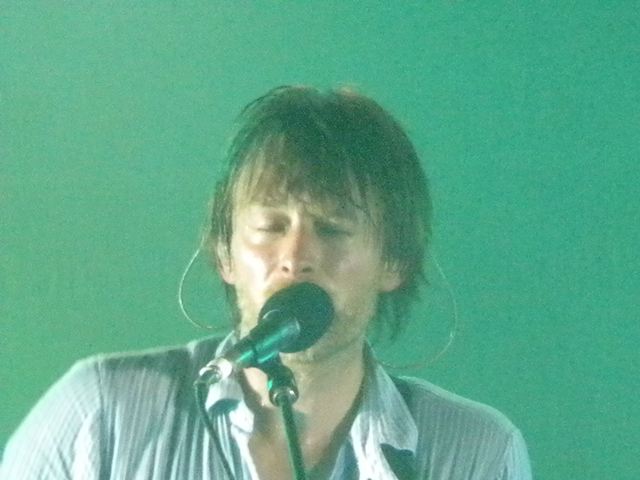
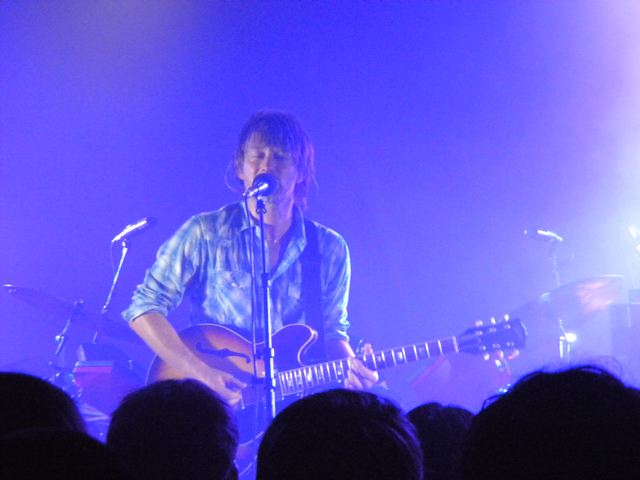
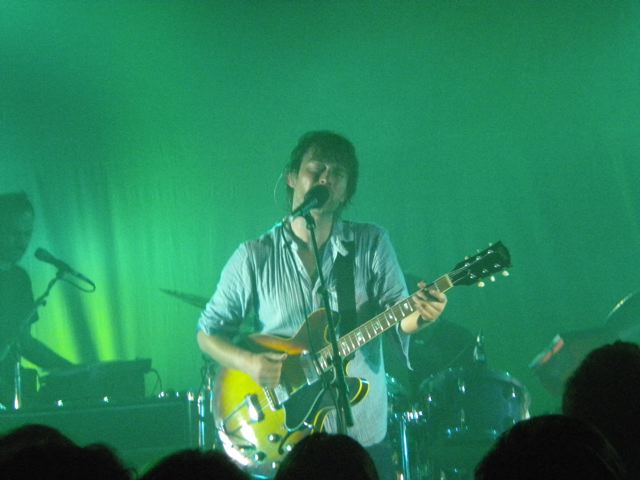
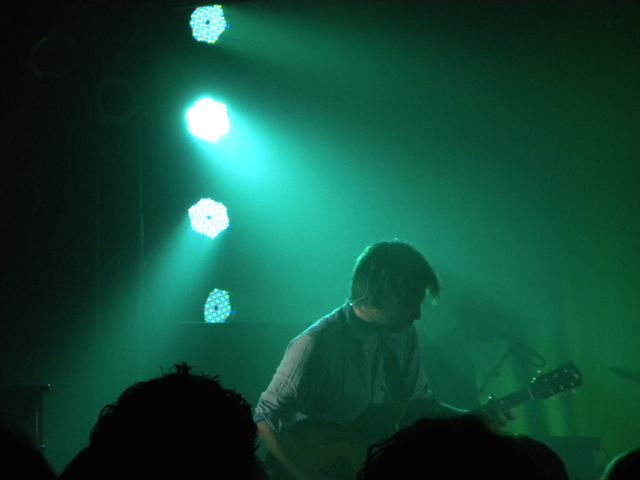
Thom and mates play the Echoplex club in Los Angeles, 2 October 2009. Photos courtesy of MPT.
Thom performed "Super Collider" at the Orpheum shows the following two nights in LA (after we shouted out our request at the Echoplex)--thanks very much indeed, Thom.
Super collider
Dust in a moment
Particles scatter
Coming up from the soup
Swimming upstream
Before the heavens crack open
Thin pixelation
Coming up from the dust
In a blue light
In a green light
In a half life
In half light
In a B-spin
Flip flopping
In a pulse wave
Outstepping
I put the shadows back into their boxes
I am open
I am welcome
For a fraction
Of a second
I have dislodged my depression
I have jettisoned my illusions
I’ve put the shadows back into their boxes
I’ve put the shadows back into their boxes
(I see the angel hanging over the balcony *)
*this line added in LA 2009
"These Are My Twisted Words" has followed "Harry Patch (In Memory Of)" as a release on Radiohead's website, only this single is "free of charge" and was accompanied on some download sites by artwork. Engineered by Nigel Godrich and Drew Brown.
An artwork file known as "Twisted Woods" by Stanley Donwood and Thom Yorke (aka tchock), consists of 14 black and white panels of tree silhouettes, which we are encouraged to print out on at least 80 gsm tracing paper (or else the printer will eat them as was discovered) and then arrange them in layers in an order which pleases us.
We are pleased.
The hottest ticket of Outside Lands 2008, Radiohead in San Francisco.
"Idioteque" and "Everything In Its Right Place" threw the crowds into wild hypnotic dances. Thom's voice hovered in the air on "Videotape", "All I Need" and "Nude". "Exit Music" haunted, as did "Pyramid Song".
There are downloads of the entire concert online--in mp3 and flac. But as good as they are (and as grateful as we are to those wonderful people who recorded them) the downloads don't do the concerts justice. Connecting to each other, and to the audience, the band members crooned, purred, roared, screamed, shredded and jammed--leaving us breathless (and voiceless) and exhausted. There is nothing like a Radiohead concert, except another Radiohead concert. We were treated to all of the fabulous tracks from "In Rainbows" and served up unbelievable versions of "Talk Show Host" and "National Anthem". "How To Disappear Completely" cast a spell, and "Karma Police" and "You And Whose Army" were outstanding. But then, really, they all were outstanding.
More of the Tour . . .
An Album: "The sonata form of our time."
The Download: "Maybe that’s just the nature of, as you say, people having a little faith in what we're doing."
Music: "It opens something using its maths or whatever, it opens something in you that needs to be opened, and when it is opened then your consciousness or whatever you want to call it, changes just enough for you to be able to see beyond your four walls. The place you live in, your situation, becomes something wider, for a brief moment. You don’t feel trapped. There’s a weird thing with time -- if live music is going well, you get lost in the time of it, and you thinking you’re in the present, and you’re in the past and you’re in the future, and you’re . . . da da da da. Sometimes. I have that."
David Byrne and Thom Yorke on the Real Value of Music
Byrne: I've been thinking about how distribution and CDs and record shops and all that stuff are changing. But we're talking about music. What is music, what does music do for people? What do people get from it? What's it for? That's the thing that's being exchanged. Not all the other stuff. The other stuff is the shopping cart that holds some of it.
Yorke: It’s a means to an end.
Byrne: Yeah. It's a delivery service. The thing that’s valuable to you is so important to you, but so intangible. But people will still pay to have that experience. You create a community with music, but by talking about it with your friends. By making a copy and handing it to your friends, you've established a relationship. The implication is that they're now obligated to give you something back.
Yorke: It's about whether it (the music) affects you or not. And why would you worry about an artist or a company going after people copying their music if the music itself is not valued?
Byrne: You're valuing the delivery system as opposed to the relationship and the emotional thing...
Yorke: You're valuing the company or the interest of the artists rather than the music itself. I guess we’ve always been quite naive. We don't have any alternative to doing this. It's the only obvious thing to do.
Radiohead say "Here You Go, Have a Listen."
Between October 10 and December 10, 2007, Radiohead offered its entire new album for download at inrainbows.com. Each site visitor chose the fair price to pay for the 10 tracks. We suggested £4.75 (which translates into about $10.00 when you add in the credit card service fee). Some people downloaded it for free. The upside was availablity in a whole, non-leaked and better quality version than say, i-Tunes at a price literally anyone could afford. New fans and old made it an exciting and much-anticipated event; an early Christmas or a New Year's party with thousands of eager or just curious participants. It was the musical event of 2007. It made people happy. The delivery system made people think. And talk. To each other. A good thing. So thanks, Radiohead, for the party.
Now, in 2009, Radiohead have made available the CD2 from In Rainbows, as a download from w.a.s.t.e. To those who haven't had the pleasure, enjoy.
NEW: Radiohead Tour Dates
London
Patrick Doyle is a great fan of Shakespeare. "Oddly enough, I'm moved far more often reading
Shakespeare than I am listening to music; I think he's arguably the greatest genius the
planet has ever seen."
Doyle is responsible for much of the music in Love's Labour's Lost,
Here is an excerpt from the Scorelogue magazine interview with Doyle:
Doyle: I think it's a wonderful idea. It harks back in many ways to the old MGM days. Ken adapted
the original text and he interspersed between the story great songs by Irving Berlin, Cole
Porter, Gershwin, in order to highlight, as it were, various points in the story. They become
singing soliloquies, almost like arias in the drama, in order to reiterate the point and drive
it home - they just burst into song! The curious thing is that none of us had been involved in
musicals for the cinema; I'd written a musical many years ago and had been involved in
pantomimes - these were Christmas shows very much in the style of a Broadway or West
End musical musical. In our country we, like you, were brought up on all the MGM
musicals; one of my earliest memories is watching the famous sequence from Singin' in
the Rain where Gene Kelly is singing and being rather bemused by the fact that he
handed his umbrella to a policeman in the end. I must have been about four or five,
thinking it was such a crazy thing to do. The music, comedy, and dance had a lasting effect
on me. I think one of the greatest musicals adapted for cinema was West Side Story, but
that entire world of the MGM training school seemed to me an amazing world. In a way this
film was slightly like that in that in two and a half weeks people came in and by the end had
learned all these songs and choreographed moves and lines. In fact after 2 weeks Ken
had a run through on one of the large Shepperton stages using simply tables and chairs.
Scorelogue: Sort of like a dress rehearsal?
Doyle: A technical rehearsal, in fact. Many people said afterwards, "God, you could just put that
onto the stage in the West End and it'd be a huge hit." It was wonderful to see the
rehearsals going on. Something was happening in every room: people were being taught
songs, taught harmonies, movement, and so on, and I was continually popping in and out
to supervise and find out what had changed, what was new, what was being added. It
looks extraordinary, and I think it's one of the best films ken has ever done. It's totally
charming.
*************************************
"Fans of Patrick Doyle will easily recognise his style, with the rich string writing and soaring melodies
(a cue like 'Beauty of a Woman's Face' is heartbreakingly beautiful). There is a mammoth cue, the nine minute 'Twelve Months and a Day..." which is very impressive. Without doubt Patrick Doyle writes some of the most beautiful music composed for films these days, he's a Georges Delerue for the new millennium. Another example is 'You That Way, We This Way..." with a lot of tear-jerking mid-register string writing. Such beauty."--Mikael Carlsson, Music From the Movies
*************************************
Another interview with Doyle about music and working with Branagh.
A Labour of Love
Actor/director Kenneth Branagh has introduced a new cinema
audience to Shakespeare, from his cinematic debut in
Henry V (1989)
to Love's Labours Lost (2000), his latest in the series. All have
featured music by Scottish composer Patrick Doyle, who spoke to
Amazon.co.uk about putting the Bard into a 1930s musical setting.
Amazon.co.uk: After six movies together, how much of a verbal
short-hand has developed between you and Kenneth Branagh?
Patrick Doyle: It's a very relaxed relationship. Generally speaking, once
he's talked about what he's after in terms of style--we're set. For Love's
Labours Lost there was a lot to think about stylistically. We knew there
were the songs, but there was how to introduce them musically. Ordinarily
you'd get something like four bars in the old MGM style of musical cinema.
But it took a while to dawn on us that we needed a much longer preamble
before the song emerged. Because it's Shakespeare, that introduced a very
new aspect in an otherwise very traditional world of music. This was an
example where our dialogue evolved throughout the process of working
together. On something like Hamlet, he was clear about what he wanted
from the start. It needed something that talked about the man musically in
terms of honour, optimism, sadness etc. Ken likes a tune first, and that's
really the barometer for the rest of a film for him. He's happy for the
rest to
develop once we're set with a main core.
Amazon.co.uk: How do the songs replace some of the Shakespearean
text?
Doyle: Ken has adapted the play for the screen, and obviously he cuts
down a long play to make a short film. But the point of the songs is
they're
like arias in an opera: they highlight the Bard's words. Really they're a
bit of
fun that capture the essence of what Shakespeare was after. In many places
it's as simple as: "I love you and can we get together for a while?"
Amazon.co.uk: Did you help select the songs?
Doyle: They were entirely Ken's choice. My job was a big piece of musical
direction as well as providing the underscore. I did some work on the
arrangements. I'm sure it was very different from the old days of MGM
musical where they had months and months of preparation. Filming started
two months after we began on the songs, and then once we saw the
choreography the arrangements had to change again. My feeling when I first
saw them filming was I'd have to give a bold lush score, because the whole
thing looks so bright. I felt the story needed something strong yet not
incongruous to the performances or the songs.
Amazon.co.uk: What were the important themes or characters for you to
focus on in your score?
Doyle: Ken's speech in the library when he talks about the power of love
and a woman's touch inspired one of the main themes: that had to have a
nobility to it, something with a feeling of English choral music because
of the
university setting. It looks so quintessentially English that to me it
called for a
theme that represented that look. The score had to create a whole new
world to complement the songs. Even
these longer introductions going into the songs are separate things: the
audience has to hear them and
subconsciously know they're going into a musical number. Musically, you're
preparing and leading the
audience by the nose so it's not a shock to encounter a song in
Shakespeare. A great example is "I've Got A
Crush On You", where each character has a verse. It's a real comedic
moment and I had to write the
underscore way in advance.
Amazon.co.uk: What have been your proudest musical moments over the course
of your collaborations
with Branagh?
Doyle: Henry V as my first picture was one of the most thrilling
experiences of my life. To hear a symphony
orchestra conducted by Simon Rattle doing my music was just beyond words.
I was a bit emotional when
they played the first bit back. Much Ado About Nothing was such an
extraordinary project. To spend six
weeks in Tuscany with that cast. I laughed like a drain all the time going
to Florence for your evening meal.
Dead Again had some of the best recording sessions I've had. Hamlet has
one of my all-time favourite
moments with the sword fight at the end. That string piece with lots of
pizzicato was recorded on the second
take. It was the most phenomenal sight-reading I've ever known. We had so
much fun at the Oscars running
up and down the aisle shouting "loser!"
Amazon.co.uk: Branagh announced wanting to adapt all of Shakespeare's works
for film. Which play would you most like to work on?
Doyle:"The Scottish Play" is my favourite of course!
For audio clips of Doyle's music from Henry V, and other Henry V multimedia, visit the story page
for Henry V and scroll down.
*************************************
Love's Labour's Lost CD Liner notes
From Director Kenneth Branagh
Perhaps it was the challenge of walking into a meeting with film financiers to persuade them to bankroll an obscure
Shakespearean comedy musical. Or perhaps it was a love affair with this neglected play. Or perhaps it was my awed
admiration for the great Hollywood extravaganzas of the '30s, '40s, and '50s. Whatever the reason, Patrick and I were pretty
sure that we would be setting ourselves an irresistibly exciting and demanding creative challenge by fusing Shakespeare and
the musical. And so it proved.
A plot that many critics have described as silly; a style that moves from high romance to farce to social satire; characters who
can veer from narcissism to the grotesque -- all are inside a play which, alone among Shakespeare's works, went unperformed
for some two hundred years after his death. Add to that the very genre of film musical, rarely revived, replaced, we were told,
by the rock video. This soundtrack is the essential element with which we attempted to overcome these difficulties. .
We chose classic songs from composers whose economy, lightness of touch, and linguistic and melodic brilliance could stand
beside the equally delicate poetry of the playwright. And we strived to create new arrangements that took their style from the
drama (and the comedy); orchestrations that would viscerally give audiences the vicarious thrill of on-screen emotions; and
finally, a narrative score that required Patrick to tackle the awesome challenge of complementing both Shakespeare and some
of the major popular songwriters of the twentieth century. Patrick, I am sure you will agree, has risen to the occasion with an
immensely joyful and touching work. My collaboration with him and the sensational team that enabled us to realise this
deliciously crazy endeavor was truly a privilege. I thank them all for their patience and talent. And I know that all of us thank
Mr. William Shakespeare, Mr. Cole Porter, et al for this opportunity. .
Perhaps it was the challenge of walking into a meeting with film financiers to persuade them to bankroll an obscure
Shakespearean comedy musical. Or perhaps it was a love affair with this neglected play. Or perhaps it was my awed
admiration for the great Hollywood extravaganzas of the '30s, '40s, and '50s. Whatever the reason, Patrick and I were pretty
sure that we would be setting ourselves an irresistibly exciting and demanding creative challenge by fusing Shakespeare and
the musical. And so it proved.
A plot that many critics have described as silly; a style that moves from high romance to farce to social satire; characters who
can veer from narcissism to the grotesque -- all are inside a play which, alone among Shakespeare's works, went unperformed
for some two hundred years after his death. Add to that the very genre of film musical, rarely revived, replaced, we were told,
by the rock video. This soundtrack is the essential element with which we attempted to overcome these difficulties.
We chose classic songs from composers whose economy, lightness of touch, and linguistic and melodic brilliance could stand
beside the equally delicate poetry of the playwright. And we strived to create new arrangements that took their style from the
drama (and the comedy); orchestrations that would viscerally give audiences the vicarious thrill of on-screen emotions; and
finally, a narrative score that required Patrick to tackle the awesome challenge of complementing both Shakespeare and some
of the major popular songwriters of the twentieth century. Patrick, I am sure you will agree, has risen to the occasion with an
immensely joyful and touching work. My collaboration with him and the sensational team that enabled us to realise this
deliciously crazy endeavor was truly a privilege. I thank them all for their patience and talent. And I know that all of us thank
Mr. William Shakespeare, Mr. Cole Porter, et al for this opportunity.
From composer Patrick Doyle
Shakespeare wrote lyrics to be sung in many of his plays, but for this adapatation of Love's Labour's Lost, Kenneth Branagh
had a unique approach. Ken's idea was to incorporate existing popular songs into the score, in particular, some of the most
masterful tunes and lyrics in modern musical history, written by the likes of Gershwin, Porter, Kern, and Berlin. Even before
filming began, there were many meetings involving the music, for all of us knew we had a mammoth task before us.
From the moment I saw rushes, my instincts told me that a big, lush, romantic, magical score would inevitably emerge and that
the arrangements had to be "filmic" and driven by the drama. In this context, the popular songs we used would seem like
arias, springing out of a moment to highlight a thought or to advance the narrative.
As my work on the score progressed, it became clear that Ken's unique approach to Shakespeare demanded particular
musical ideas: unlike the traditional song introductions of the past (which are relatively short), the songs here needed longer
introductions; the Collegian design (being quintessentially English) called for a traditional English sound; the Royalty aspect
cried out for a noble quality; the very funny "Cinetone News" sequences needed none other than the classic "March of Time"
accompaniment; the comic characters -- who, with the exception of Costard, took themselves very seriously -- needed music
that reflected their dignity; the opening titles needed to sound like the old MGM overtures (which I will always associate with
childhood Sunday afternoons, accompanied with the smell of home cooking).
Finally, as this is one of Shakespeare's most poetic works, it sometimes proved difficult to reflect its poetry in the score -- never
more so than in the scenes where the four couples say good-bye.
This project was a hugely enjoyable new experience, and it is certainly one of Ken's finest films. He has been a great friend,
and I thank him. And as I suspected from the very beginning, working on this film has turned out to be one of my most
interesting projects to date.
Click here to listen to "I Won’t Dance". (Wav file)
Sony's Love’s Labour’s Lost CD site.
Liner notes from the CD site.
(Thanks to Isabel)
*************************************
Below is a partial transcript of composer Patrick Doyle's April 1994
appearance on KUSC-FM's The Record Shelf, hosted by Jim Svejda.
On his career before film composing:
Patrick Doyle: I suppose I had a fairly good career as an actor. I
managed
to have a house, a mortgage, a car, kids, the whole bit, so in those
terms I
survived as an actor, at least I worked. And occasionally I would write
for radio or the odd television thing, but I was very often asked to
write
for the theater. I wrote a musical, in fact...that was called
"Glasvegas" (as opposed to the other place) and it was a kind of Fifties spoof
sendup.
It was very successful, and in fact it was revived about two years ago,
just a small tour of Scotland. So that was great fun. So all along the
line,
in fact I had to keep refusing musical direction work. But no matter
where I
went, I always ended up doing a bit of music and acting, because it was
cheaper to employ me, because you got two jobs for the price of one.
(Laughs) I'm serious. So I was always helped. I mean, someone said,
he'll
never stop working because he's got two jobs he could turn his hand
to. So
really, that's what happened.
Jim Svejda: How did [Kenneth Branagh's film] "Henry V" happen to happen?
PD: Well, it was really through a mutual friend of Ken Branagh's and
myself
called John Sessions. I suppose he's the British equivalent of Robin
Williams--extremely, extremely gifted comedian. And John and I worked
together as actors in a Bert hold Brecht play. And I remember during a
break
I was doing a pastiche, some Mozart--it was a sendup for a TV show I
was
doing previously, a kind of evening current affairs show where there
was a
song at the end of the show, and I did the sendup of an opera. And so
I was
joking and laughing, and playing it for John, and really through that
John
got to know about my musical background. And when Ken actually asked
John if
he knew anyone who could possibly write some music for a forthcoming
production of Twelfth Night, John suggested myself. And I remember he
had
talked about this Ken Branagh, and he had recently won a lot of praise
for
his performance of Henry V in the RSC. I hadn't seen the performance.
So I
knew vaguely the name, but this was just at the beginning of the
Renaissance
Theatre Company, which Ken had formed with David Parfitt. So I went
along to
meet Ken, and we got on very well--he had yet to hear a piece of my
music,
and offered me the job of writing the music for his production of
Twelfth
Night. And I thought, well, I'm going to jump at the chance of this
because
I'm really fed up acting and writing music, I'll just write the music
for
the first time in a long time. And I found out during that show that I
just
lost the bug for acting. I just thought I really loved writing this.
It was
a small band, only four people, and I loved it so much, I thought,
this is
what to do now.
On the City of Birmingham Symphony Orchestra:
PD: For someone who had never written a film score before, and to
suddenly
find out that someone of Simon Rattle's caliber and an orchestra of that
standard were to be the people employed for the job--it was just the
most
terrifying prospect. That was more terrifying than anything else--
forget
the fact that Walton wrote his version a while ago--that was the most
frightening thing. I was terrified because I had so much respect for
Simon
Rattle's work. It's an orchestra where you can almost instantly tell,
even
by just switching on the car radio or something--it's such a
distinctive
sound, it's such a tight ensemble, just a special, special talent.
JS: Is there a better orchestra in Britain these days? I don't think so.
PD: Well, for me, it's my favorite orchestra, there's no question,
because
the way he rehearses them and the way he allows certain members of the
orchestra to go away on sabbatical and do chamber work. I remember I
talked
to one of the double bass players and he said he goes away maybe for a
couple months to Germany or whatever and gets together with European
friends
and they do concerts and do chamber work. And obviously, they come back
bringing all that wealth of experience back into the orchestra. He
usually
rehearses longer, and it pays huge dividends. The composer gets a
complete
crack of the whip. There's no question. He gives the music every
chance in
the world to breathe. So it was just fortunate that the photographer
that
was employed on the film of Henry V was a neighbor of Simon Rattle's.
The
producer of the picture was very keen for Simon Rattle to do it. I
wouldn't
have dreamt of asking for Simon Rattle and the Birmingham Symphony
Orchestra. But the producer was keen on it, and the demonstration tape
that
I worked on--there was an electronic version done--was actually given
without my knowledge to Simon Rattle. And Rattle nodded his head in the
right direction and said yes, he'd quite like to get involved in this.
So
when the news of that came back, thatís what made me want to think,
I'm not
doing this job! (Laughs) It's too scary! But he did the most magnificent
job, and it was just a thrill. A thrill. Unbelievable.
On recording the score of "Henry V":
PD: I must say there was a point during a cue that accompanied the very
famous St. Crispin's Day speech, and watching the playback, we were
looking
at the monitor and they had just recorded the cue...and I remember
that was
the most cathartic moment. I've never cried before or since, in my
career,
emotionally over anything. I like to have good fun as much as I can,
but I
just completely broke down. It was embarrassing, it was really
embarrassing!
I've never done it before or since. My father sang in the choir--a
great
tenor, a terrific tenor. And my sister is a very good singer, in fact
she
sang on "Into the West", a score I did. So they were there, and Simon
Rattle
gives a hug, and it was like--oh, so mortifying. It was like the
Oscars,
you know--(Mimics) "Dahling, you were mahvelous! No, you were
mahvelous." I was in a terrible state. I was an emotional wreck.
Because I
just couldnít believe this had all happened. I heard this orchestra
blasting
away, and I just couldn't believe it. And to this day, I still can't
believe...that I'm sitting here being asked about it. I'm waiting on the
Hand of Fate--"Mr. Doyle, your time ís up!" (Laughs) "You've been found
out!"
JS: This is probably a silly question, but was anyone really prepared
for
the success that this film enjoyed?
PD: I wasn't prepared for the subsequent attention the score got. I
would
have been very content just to get through it, to have anything
accepted,
and just to carry on slowly working my way toward another job. But as
far as
the attention in this part of the world was concerned, it was a very
pleasant surprise for Ken to be nominated for two Oscars. I know that
the
score got an awful lot of play in America, and it sold many CDs, so I
was
very surprised, as I say, and I'm surprised I'm sitting here,
so...continually surprised.
On "Non Nobis, Domine" (the music at the end of the battle in "Henry V") :
PD: The actual structure of it is Ken Branagh's. Ken said, "I want it to
start off with a solo voice, and I want it to build and build and
build and
build." Ken described the shot in detail, said he wanted to use the
words of
"Non Nobis, Domine" and he described the shot--the carnage, dead
soldiers,
dead horses, mud, gore, spears, overturned carts--and he would be
walking
through all the mud and gore toward a cart where he would lay a body.
He'd
be carting one of the boys that were murdered by the French. So the shot
ended up just as he described. And I wrote this piece--it was part of
the
demonstration tape, as it were. So really what is actually on film is
what
was given to Ken as a result of a very clear--you know, I could see the
thing, I could actually picture it in my mind's eye, it was such a clear
picture of what he was about to shoot. And the actual music, in fact,
was
used on location, as a dolly came along, this huge tracking shot, the
music
was blasting so everyone could feel the atmosphere and give their
utmost.
On Kenneth Branagh's film "Dead Again":
PD: It was [a great leap], but it wasn't in many ways, because of the
fact
that I leaped from one job to the next was a miracle. (Laughs)
Obviously, it
was the same director, but being brought up on a diet of American
pictures,
especially the older pictures, certainly I was aware--I had seen many
Hitchcock pictures, pictures like "Rebecca." When Ken handed me the script
before it was shot, I knew it was a great piece of writing. Although
we had
problems in terms of the structure, once it was actually filmed they
were
very quickly sorted out when we played it to audiences, and there were
a few
rewrites and Scott Frank did a great job. So it was a hard, tough
score, a
very tough score, because it had to be so varied and it had to be a
modern
score, it had to pastiche the Forties. The plot was so convoluted and
the
score had to reflect a piece of music that this composer within the
picture
was writing, yet it had to address the picture and drama as well. So
it was
a very interesting challenge, and a tough one because it was a
follow-up to
a film that I was surprised that I got through in the first place,
Henry V,
and the fact that I thought, well, there's bound to be some section of
the
population out there interested to see what I am going to come up with
next.
I think it did quite well, Dead Again, I'm not quite sure of the
figures,
but in terms of a second picture, Ken did a great job.
JS: For people who didn't see the film, there are two stories going on--
one in color, one in black and white. The black and white is the
murder of
the wife of a famous composer. Both of these people bear a strange
resemblance to the two people in the modern part of the film--and I
must
say that he is about the only British actor I've ever seen that does an
absolutely convincing American accent.
PD: Well, he has a very good ear.
JS: Olivier's was terrible. Whenever Olivier played an American, it was
awful, just awful.
PD: Certainly, as far as Ken's concerned, he's got a terrific ear, and
the
very first time I saw Ken on stage was a play that he'd written called
"Public Enemy" in which he played a character who--it was set in Belfast,
which is where he was brought up until the age of eight. He was
playing a
character obsessed with Jimmy Cagney. He does the most brilliant Jimmy
Cagney impersonation. In fact, when he's slightly chubbier, when he
has a
good old holiday and the pasta and the wine flows, he tends to look very
strikingly like James Cagney.
KS: Which is something that a lot of the reviews, when Henry V first
came
out--they said, this guy really looks like Cagney, he really reminds of
the kind of power, streetwise . . .
PD: Clearly, he is a brilliant mimic, most people don't actually realize
he's a brilliant mimic and that accent--I'm sure he had to work at
it, and
do his homework. Both of them in fact have very good ears for accents.
Emma
did an equally convincing American accent.
On Brian DePalma's film "Carlito's Way":
JS: In Carlito's Way, you worked in an idiom which I don't imagine
you've
had much experience with.
PD: Uh...no. Certainly, I've never met people like that. I don't mean
the
actors, I mean the characters they were portraying. I remember Brian
DePalma
mentioned the script, he said, "It's a gangster movie, have you ever
done a
gangster movie before?" I said, "No, and neither have I met any."
(Laughs)
So he chuckled. I remember I got poor Brian DePalma out of his bed, he
was
on location, we kept trying to contact each other for a week and I
woke him
up. I think he'd just gotten in from this plane journey and I said,
"Don't
tell me it's one o'clock in the morning, Brian"--I was afraid he'd
tell me
it was five o'clock in the morning. He was terribly nice, and very very
strong, knew exactly what he wanted, he knew he wanted an elegiac
opening
for this picture, so I said, well I'll give you one of them, and in fact
it's one of the pieces Iím very proud of. When I wrote the piece, I also
wrote another version, just in the hope that one day if ever there
were a
concert version of it I would have it on hand, because I was
particularly
proud of it. I had worked very hard, as I do on all projects, but
particularly for this film, which I thought was one of the finest and
most
beautifully crafted pictures I'd seen in a long time. And he's a very
gifted
man, and I was very flattered to be asked to do it.
JS: There's a tracking shot in this movie--the cue is actually called
"Grand Central." One of the great tracking shots, period, in my
experience--it just goes on forever and ever and ever and ever.
PD: (Laughs)
JS: Why don't you basically set up the situation with what's happening
here?
PD: Well, basically itís the climax of the picture where the central
character, Carlito played by Al Pacino, is rushing toward an arranged
meeting with his girlfriend, and the baddies, as it were, are chasing
him.
When I saw this section of the fi lm, I saw it very early on before it
was
finally cut. I knew it'd have to be a piece of music that rose to the
picture, because it was such an incredibly directed piece and there
was this
particular hand-held camera shot that went on for about...God, was it
two
and a half minutes or something? It was directed like a ballet. The
whole
thing was so balletic, so beautifully moved. That was one thing that
became
abundantly clear, in a matter of seconds, was that this man had
impeccable
timing. He knew how to time and how to cut, and he knew the rhythm of
the
film. And I think they're absolutely inseparable, the fact that a film
to me
must have movement. It makes a great picture, the fact the director
has a
sense of movement, and that's something he has plenty of, he has it in
abundance. And even when he was describing to the editor about how to
cut
it, he saw a rough shape--it should be there, there, there, and done.
Even
when he was describing the cut, it was like there was a rhythm, a
drummer or
something. So I just knew that I was in the hands of someone who knew
exactly how music worked to picture. There'd be no love lost in
telling me
exactly what. Whenever he gave suggestions they were on the button.
And that
was a particularly difficult cue because it had so many ups and downs--it
was so long--and it had to be a continual theme. I suppose the obvious
thing, because it was at a station, was to have a train rhythm, but I
didn't
consciously come up with what was so apparent, like a locomotive theme
(Hums it)--believe it or not, that was not conscious. That was a
totally
subconscious rhythm and theme--it wasn't until the recording that I
thought well, of course. (Hums) It wasn't that conscious. And it seems
the
obvious thing--what ís he talking about--of course that ís the obvious
thing to do--choose a train rhythm! But I didn't; I didn't consciously
think.
On Kenneth Branagh's film "Much Ado About Nothing":
PD: "The Picnic" which opens the picture, clearly called for a
pastoral,
luxurious, relaxed-sounding cue. And Ken and I had watched the film
mentioned earlier called "Dead Again" and there was a particular theme
that I
used in that earlier on which was eventually dropped, and Ken felt it
would
be ideal to try and unearth it again and try in some way to get it in to
Much Ado. He was so fond of it. And we found it almost fitted--with a
bit
of work--to the words of "Sigh No More, Ladies." And so then that
became
one of the main themes throughout the picture. The Overture, as it
were--I
suppose it's an Overture in the strict sense in that it has virtually
every
single theme--and it does have every theme that ultimately appears in
the
picture--but it was an enormous pressure, that one, because it' s just four guns blasting all the time, it's relentless. And I had to portray
two
things, clearly: the femininity present in the picture, and also the
masculine side of things. I had to have one bouncing off the other. So
that
was the challenge of it. Plus, it had to clearly address all the fast
cutting. Not all--it wasn't all mickey-mouse, it wasn't catch every
cut.
But one of the interesting technical features of it was the opening, the
kind of Magnificent Seven moment when you have all these actors,
slowly each
one came up. I think there was--let's count them--(Hums main Overture
theme)--so there were seven of them I think! Anyway, one by one they
come
up and as always I stared at the images for a long time thinking,
"What am I
going to do with this?" Because it wasn't quite regular. Almost
regular, in
terms of the distance between each cut and how they come up. But I
suddenly
came up with the idea of just having these big leaping horns and (Hums
theme) and the seventh and the sixth . It looks as if they're all
doing it
in three-four time, but with the help of Roy Prendergast, who's a
terrific
musician and my music editor, Roy and I ramped the click. In other
words,
itís not strictly three-four time, it pulls slightly, and to catch the
cut
every time bang-on. I mean, I suppose I could have contacted the
editor and
said, "Look, I want this cut," and Roy and I would have worked out the
footage, but it was a nice challenge to just leave it as it was, to
take the
cut that was presented to me, and then write around that. I studied
that for
a long time before I thought, What am I going to do? It had to be very
butch. And it had to be heraldlike, it had to herald the arrival,
clearly,
of all these men back from the war.
On "Sigh No More, Ladies":
PD: I had already written this theme for a previous picture, "Dead
Again," and
it was never used. Ken came up with this idea, which I thought was mad
to
begin with, that we should use the same theme. And I felt it was a bit
gratuitous, just because he liked this theme, to shove it into
something,
especially those very famous words. But he's very driven, and usually
when
he's hooked onto an idea it's very difficult for him to let go, and he
really convinced me it would work. So with a little bit of
jiggery-pokery,
we managed to do it and fit the words to it. Obviously, when we looked
at it
again it wasn't quite the same theme, but with development and some
work on
it we managed to do it. He always insists on a very strong melody.
It's something which is a difficult brief, in that it should be instantly
appealing, yet have a longevity, have a life after. It should do all the
right things--it should reach a climax when a melody should reach a
climax, it should drift back to a final conclusion when it should.
Take a
beautiful melody, "The Londonderry Air." It just does all the right
things
at the right time, and lands its final resting spot in a perfect
place. If
it appeals to me, then hopefully it will appeal to other people.
On influences and career:
PD: I suppose I've been lucky in that my background in theater has
paid, I
think, great dividends. It was such a varied background. Whenever I
approach
film, it's clearly appealed to all that past experience. I also played
a lot
in bars, when I was in London, over a period of six years while I was an
actor as well. That helped to keep the wolf away from the door. It also
meant I was playing great songs by some of the most talented American
composers--Cole Porter, Irving Berlin--and those wonderful people.
That
helped, I think, each time I played that stuff. It helped to give me a
sense
of harmony, of harmonic progression, a great sense of melody, and those
songs for those shows are quite theatrically written. All that added
to the
melting pot to prepare me, I think, for writing for film. I was always
subconsciously aware of the interaction between drama and music, and
consciously--when it was bad, I think I noticed it. When it was working
well, I enjoyed the product, I enjoyed the film or TV program or
whatever.
So it seems to be a natural path for me, looking back on it. I work very
hard, and I take it very seriously, and I'm a very committed composer
and I
get terribly involved in it and very passionate about it. I would hope
that
comes across.
For the Love's Labour's Lost
page, click here.
For the Making of Love's Labour's
Lost, click here.
Click here for Trust Kenneth Branagh. Interviews with the RTE, Belfast Telegraph and The London Guardian are paired with photos and screen
captures from Love's Labour's Lost.
For the Daily Telegiraffe review of Love's Labour's Lost,
click here.
For other reviews of Love's Labour's Lost, click
here.
For Love's Labour's Lost and more in the Guardian interview
with Kenneth Branagh at the National Film Theatre's 1999
Branagh retrospective, click here.
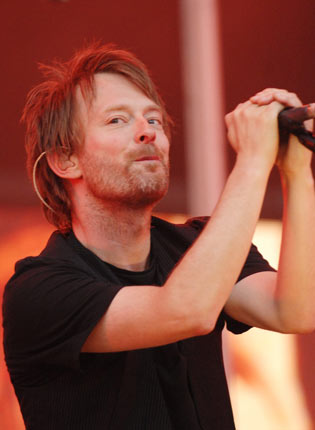
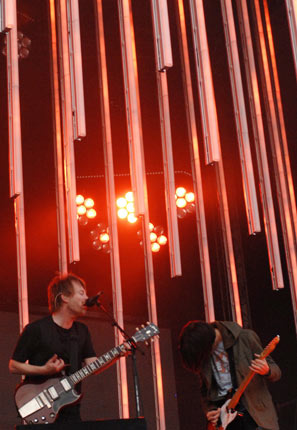
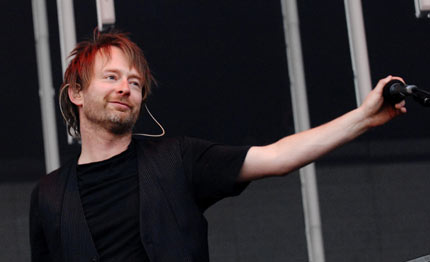

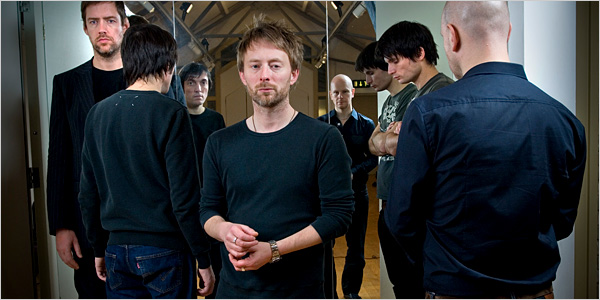

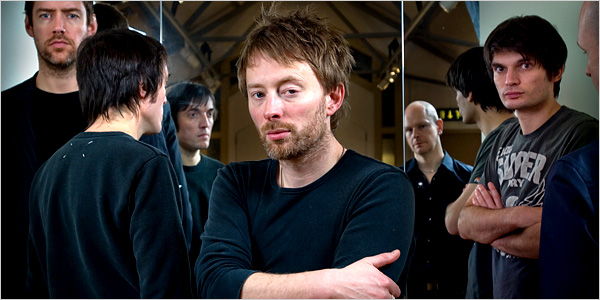
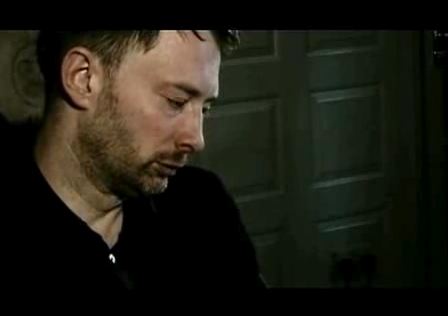
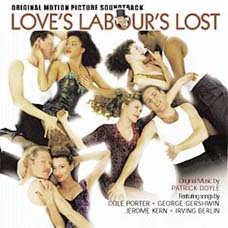
The Daily Telegiraffe
What's Up: MUSIC
Branagh's latest Shakespearean adaption for the screen.
Scoring Shakespeare
Paul Tonks, for Amazon UK
(Some of Svejda's comments were post-recorded and so have been edited out.)
Thanks to Terry E. for typing this transcript. Thanks to Maria Isabel Ortiz.

FRONT PAGE
News/
The Good BitsSHAKESPEARE in PERFORMANCE
THE HAMLET PAGE
links/LINKS
What's Up: STAGE
What's Up: BOOKS
What's Up: MUSIC
What's Up: FILM
Fictional Characters
What's Up:
ARTToday's Special
Sure We
Thank You